Yes - AI can help you coach a youth basketball team, but not in the way most people assume. It won't run your practice, read your players, or replace a single minute of what happens on the floor. What it does well is the operator work that eats a volunteer coach's week: building age-appropriate practice plans, picking the right drills, and turning a vague idea into a ready-to-run session. For a U10-U14 team, that's most of the job off the court - and it's exactly the part AI is good at.
This is the honest version of the answer, written for the person who actually coaches at this level: a parent, a teacher, a club volunteer with a day job and ninety minutes in a gym twice a week. If you want the broad picture across every level, start with our complete guide to AI basketball coaching - or just try the basketball AI chat yourself, free, no signup. This piece stays narrow on purpose: youth.
Why youth coaching is a different problem
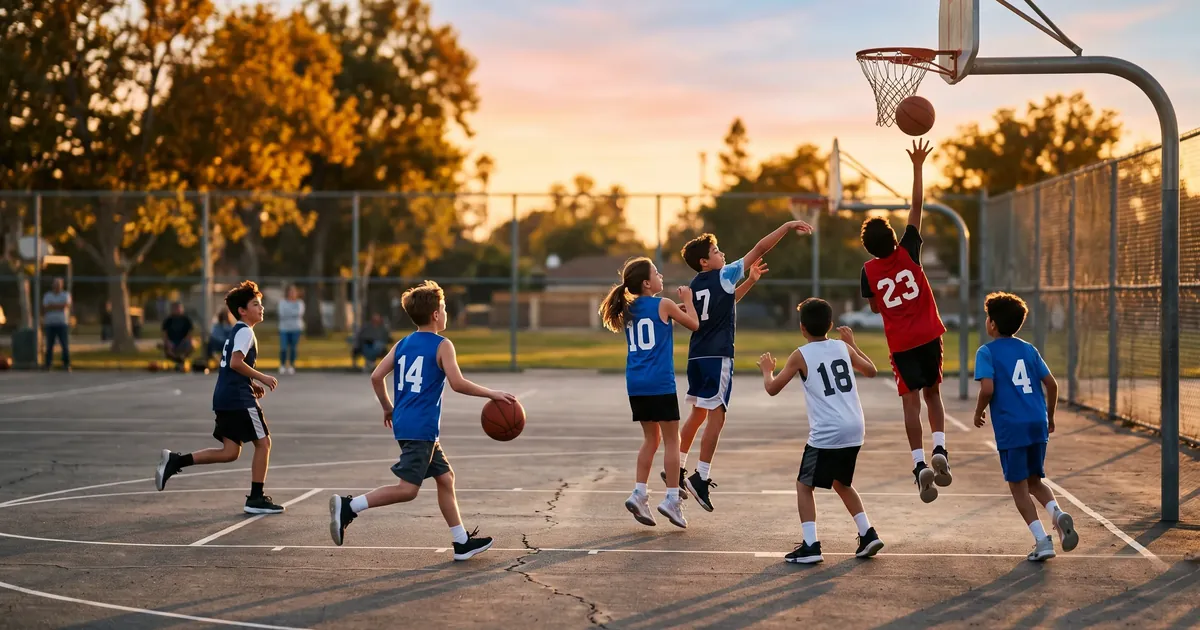
Coaching a U12 team has almost nothing in common with coaching a varsity or pro team, and that changes what AI is good for.
Most youth coaches are volunteers - often parents - with little or no formal coaching education. The Aspen Institute's Project Play has documented for years that the people running youth sport are overwhelmingly untrained, under-resourced, and short on time - and that kids quit, in large numbers, mostly when it stops being fun. That's the real brief at this age: keep it fun, teach fundamentals, and don't burn out the volunteer running the show.
So the question isn't "can AI out-coach me?" It's "can AI give me back the two hours I spend every week planning, so I show up prepared instead of winging it?" For a youth coach, that's the whole game.
Where AI genuinely helps a U10-U14 coach
These are the jobs where AI earns its place this season - ranked by how much they actually matter at the youth level.
1. Practice planning (the biggest win)
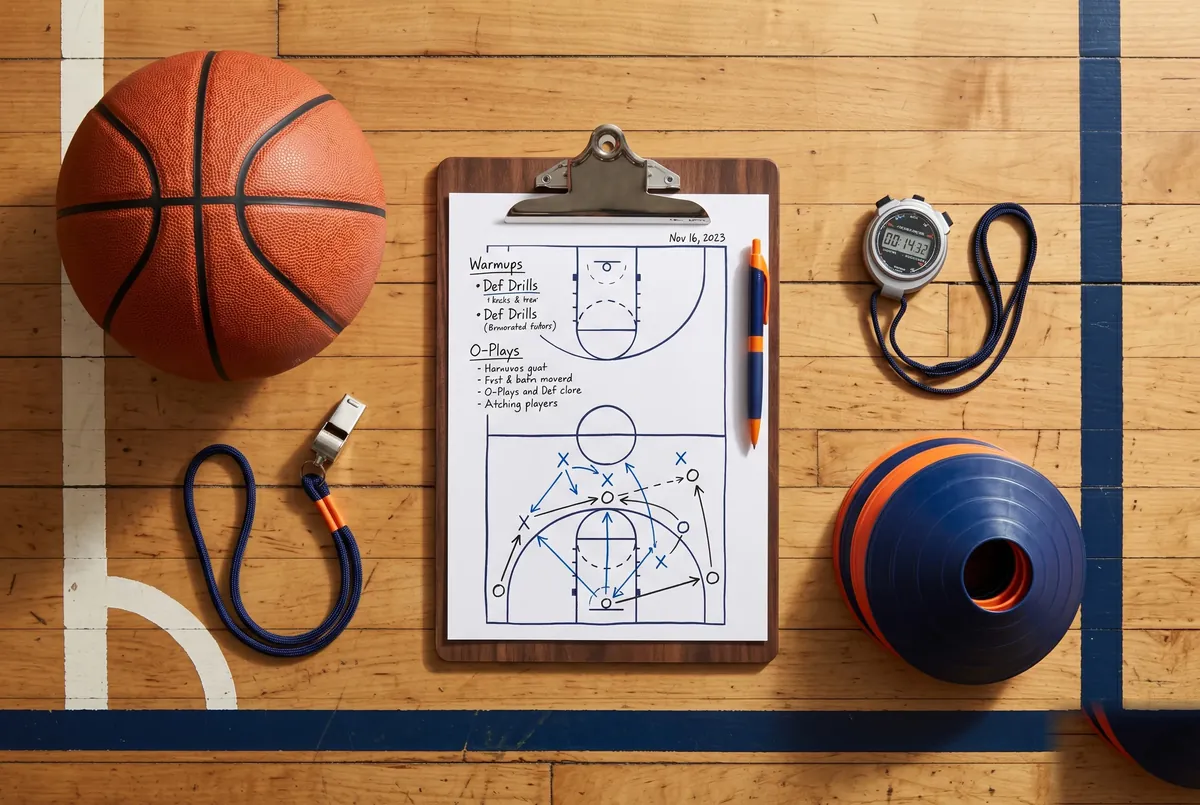
Tell it your constraints - "60 minutes, 10 kids, U11, short attention spans, focus on dribbling and layups" - and get back a structured session: warm-up, skill stations, a small-sided game, a fun finisher. For a volunteer, this is the difference between walking in with a plan and improvising drills you half-remember from YouTube.
A grounded basketball practice planner does this better than a generic chatbot because it pulls from a real drill library and sticks to age-appropriate timing instead of writing a high-school practice and shrinking the numbers. We walk through the full workflow in from game plan to practice plan.
2. Age-appropriate drills and games
At U10-U14, the right drill is the one that's fun, teaches a fundamental, and keeps ten kids moving instead of standing in a line. AI is good at suggesting these and progressing them from easy reps to a game. If you want a ready-made example, our free 4 fun training games for ages 9-11 is exactly this kind of resource.
3. Answering "how do I teach this?"
"How do I explain a bounce pass to an 8-year-old?" "What's a simple way to teach help defense without it getting chaotic?" This is general basketball knowledge, and AI - even a generic one - is genuinely strong here.
Where AI doesn't help much (yet) at this level
Equal time, because a youth coach who over-trusts a tool is worse off than one who never opened it.
- Opponent scouting barely matters. At U10-U12, you usually don't know who you're playing until you show up, and you shouldn't be game-planning around 11-year-olds anyway. The scouting features that shine for older teams are mostly noise here.
- Lineup optimization is the wrong goal. At this age, equal playing time and development beat winning. You don't need an algorithm to tell you who closes the game - everybody plays.
- Stats are thin. Most youth leagues don't keep the kind of data that makes analytics useful. There's little for an AI to analyze.
Notice the pattern: the features marketed hardest for "AI coaching" - scouting, lineups, analytics - are the least useful at the youth level. The quiet ones - planning and drills - are where it actually pays off.
The line you don't cross with kids
This is the honest part. There's a boundary at the youth level that's sharper than at any other, and a good tool makes it clearer, not blurrier.
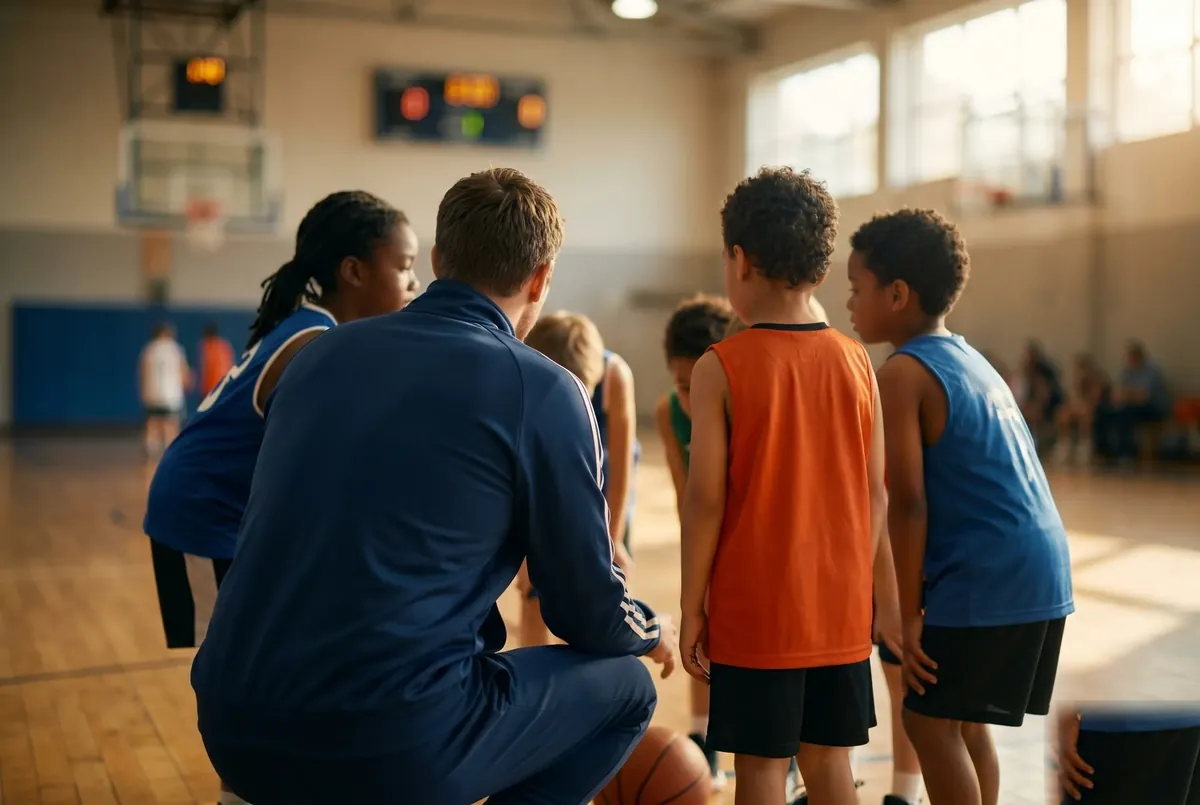
- AI can't read a nervous 10-year-old. Knowing which kid needs a quiet word and which needs a challenge is the actual job. No model touches it.
- AI can't keep it fun. Energy, encouragement, and a gym kids want to come back to - that's you, and it's the single biggest factor in whether they keep playing.
- AI shouldn't make calls about a child's development. Use it to plan the session, never to decide a kid "isn't athletic" or to rank children. That judgment is human, and at this age it's heavy.
If a tool ever feels like it's stepping into the human part of coaching kids, it's being used wrong. It's a layer under the coaching - the prep work - not a substitute for the coach.
So, should a youth coach use AI?
If you want to see what a good session looks like before touching any tool, download our free youth basketball practice plan template (PDF) - a complete 60-minute U10 session by Coach Duncan, printable, no signup.
If you're a volunteer or youth coach, the honest recommendation is: use it for the prep, ignore the hype, and keep it off the floor. Let it build your practice plan and suggest drills so you walk in prepared with two hours of your week back. Then close the laptop and go coach the kids - that part was always yours.
A general chatbot will get you surprisingly far for free. A specialized coaching tool gets you further on the planning side because it's grounded in real basketball drills and sticks to age-appropriate sessions - but at this level, even the free version of the right tool is enough to feel the difference.
Frequently asked questions
Can AI coach a youth basketball team?
Not on the floor - and it shouldn't try. AI can do the prep work for a youth team extremely well: building age-appropriate practice plans, suggesting fun drills, and answering "how do I teach this?" It can't read kids, keep practice fun, or make judgments about a child's development. At the U10-U14 level, that prep work is most of the off-court job, so AI is genuinely useful - as an assistant, not a replacement.
Is AI safe to use for kids' sports?
Using AI to plan practices and pick drills is low-risk and helpful. The thing to avoid is letting it make judgments about individual children - ranking them, labeling their ability, or deciding their development path. Keep AI on the planning side and keep every decision about a specific kid with the human coach who knows them.
What's the best AI tool for a volunteer youth coach?
The best tool is the one that saves you planning time without pretending to coach. For most youth volunteers, a free general chatbot covers basic questions, and a specialized basketball coaching tool covers practice planning and drills better because it's grounded in a real drill library. Start free, and judge a tool by whether it gives you a usable, age-appropriate session in under a minute.
Do youth coaches need AI for opponent scouting?
Almost never. At U10-U12 you usually don't know the opponent in advance, and game-planning around young kids works against their development. Scouting features matter for older and more competitive teams; for youth, the value of AI is in practice planning and drills, not scouting.
Can AI make a practice plan for young kids?
Yes, and it's the single most useful thing it does for youth coaches. Give it the age, group size, time, and a focus, and NextPlay's free practice plan templates returns a structured, age-appropriate session - warm-up, skill work, a small-sided game, and a fun finisher. A tool grounded in real drills does this better than a generic one, which tends to write an adult practice with smaller numbers.
The coaches who get the most out of AI at the youth level aren't chasing the flashiest features. They're the ones who quietly let it handle Tuesday's practice plan, then spend their actual gym time doing the only thing that keeps kids in the game: making it fun and teaching them to love it.
That's the bet NextPlay's AI coaching staff is built on - specialist AI personas that do the paperwork so you don't have to. It's free for 14 days, no card, and free for coaches who belong to a club through their organization.